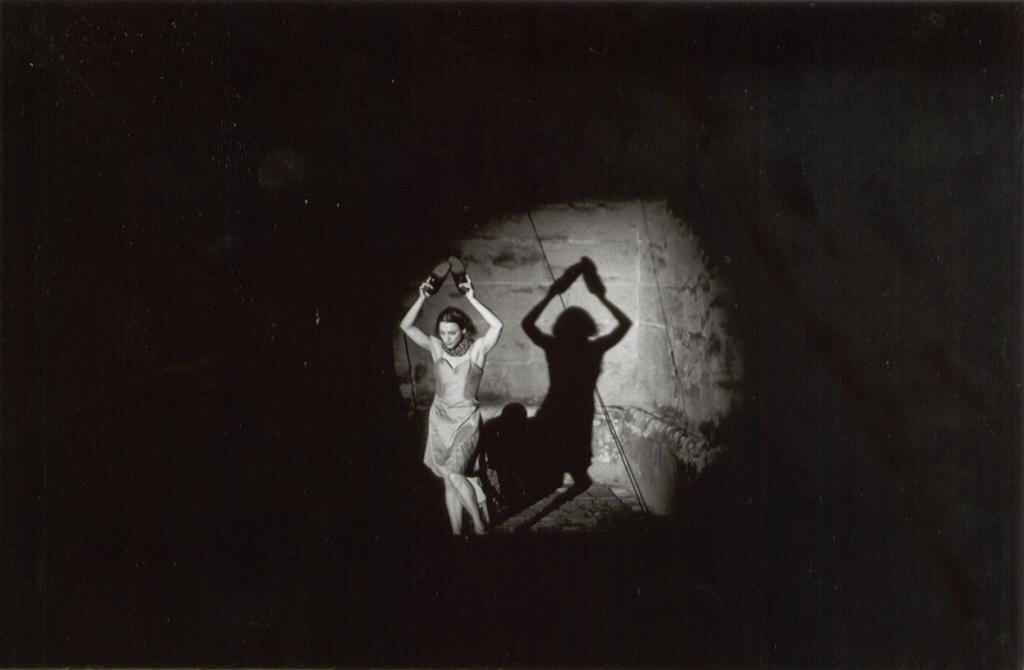
Open-air première at Festival de la Cité, Lausanne, July 2nd, 1991. Rerun at Festival de la Cité, Lausanne, July 1999.
The idea for this choreography has its roots in a long-held fascination for “Midsummer Night’s Dream ” – probably due to the highly choreographic character of Shakespeare’s play, and the spatial involvement, the liaisons, the comic mix-ups and the cases of mistaken identity which are woven into it. Very soon however, it was realized that although the Philippe Saire Dance Company possessed the means to bring the story to life in choreography, “Midsummer Night’s Dream ” as a source of inspiration should remain in the background, and the resulting creation be allowed full liberty to draw further and further away from the point of departure.
Two mains lines of investigation emerged : one of the interactions of fate and power, the other the desire to imitate. The first stems from the way the characters in “Midsummer Night’s Dream” are systematically manipulated by external forces, their actions being more due more to the actions of others than to their own will. The second line is suggested by the tendency of each character to mimic another, just as long as desire remains unsatisfied.
The action is imbued with that strange after-the-party mood, hanging between illusion and reality.
The time when tiredness melts barriers, when relationships become simultaneously clearer yet more complex. The time of rash impulse and unforeseen consequences, when we no longer know whether our actions will fade as a dream, or confront us still when day dawns.
Dissimilar elements combined into a new universe. Through their dissonance, these elements hold a dialogue which causes them to lose their initial meaning and purpose. In this state they occupy an undefined space where, as in dreams, questions of significance and truth are irrelevant.
“Those things nearest to us are least perceptible. It is precisely the hidden aspects of our daily existence which – unconsciously – we cling to the closest. Yet the only way to discern them clearly is to stand back at a distance”.
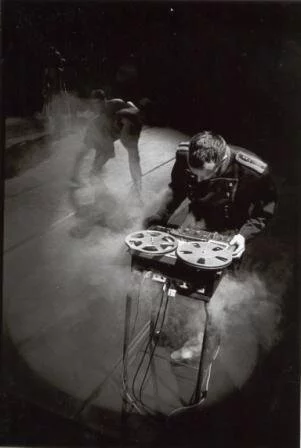
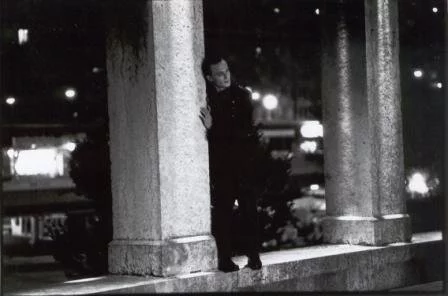
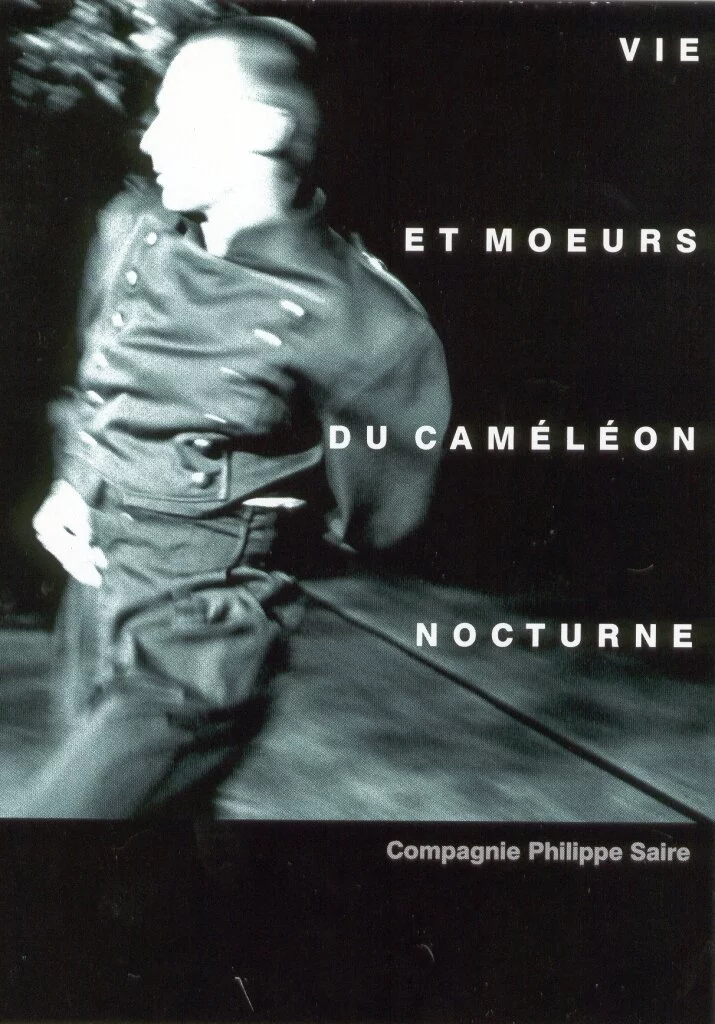


Choreography
Philippe Saire
Dancers 1991
Marc Berthon,
Charles Linehan,
Philippe Saire,
Julie Salgues,
Rahel Vonmoos
Dancers 1999
Nabih Amaraoui,
Manuel Chabanis,
Karine Grasset,
Nicholas Pettit,
Corinne Rochet
Music
Maurice Ravel
Set and light design
Jean-Marie Bosshard,
Christian Yerly
Costumes
Nadia Cuénoud
Choreography
Philippe Saire
Dancers 1991
Marc Berthon,
Charles Linehan,
Philippe Saire,
Julie Salgues,
Rahel Vonmoos
Dancers 1999
Nabih Amaraoui,
Manuel Chabanis,
Karine Grasset,
Nicholas Pettit,
Corinne Rochet
Music
Maurice Ravel
Set and light design
Jean-Marie Bosshard,
Christian Yerly
Costumes
Nadia Cuénoud


