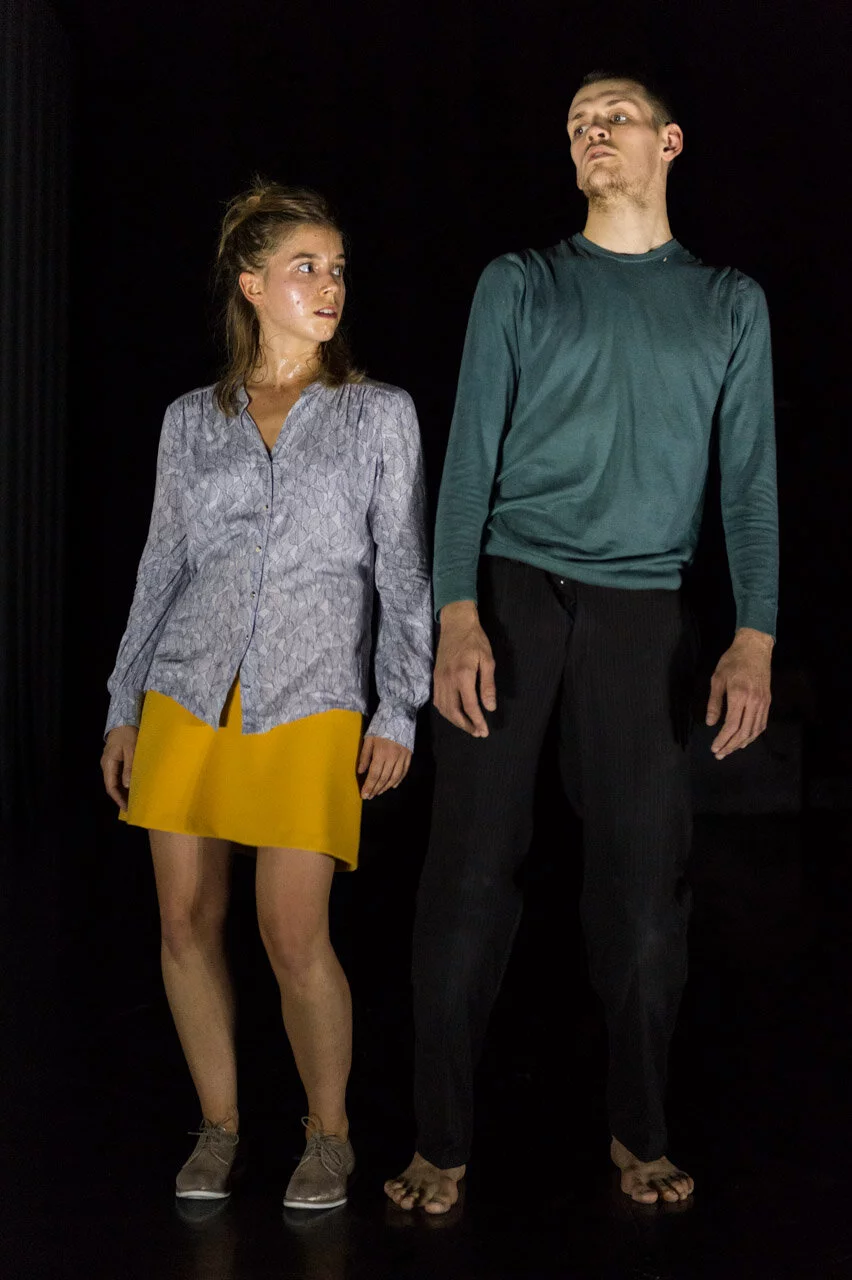
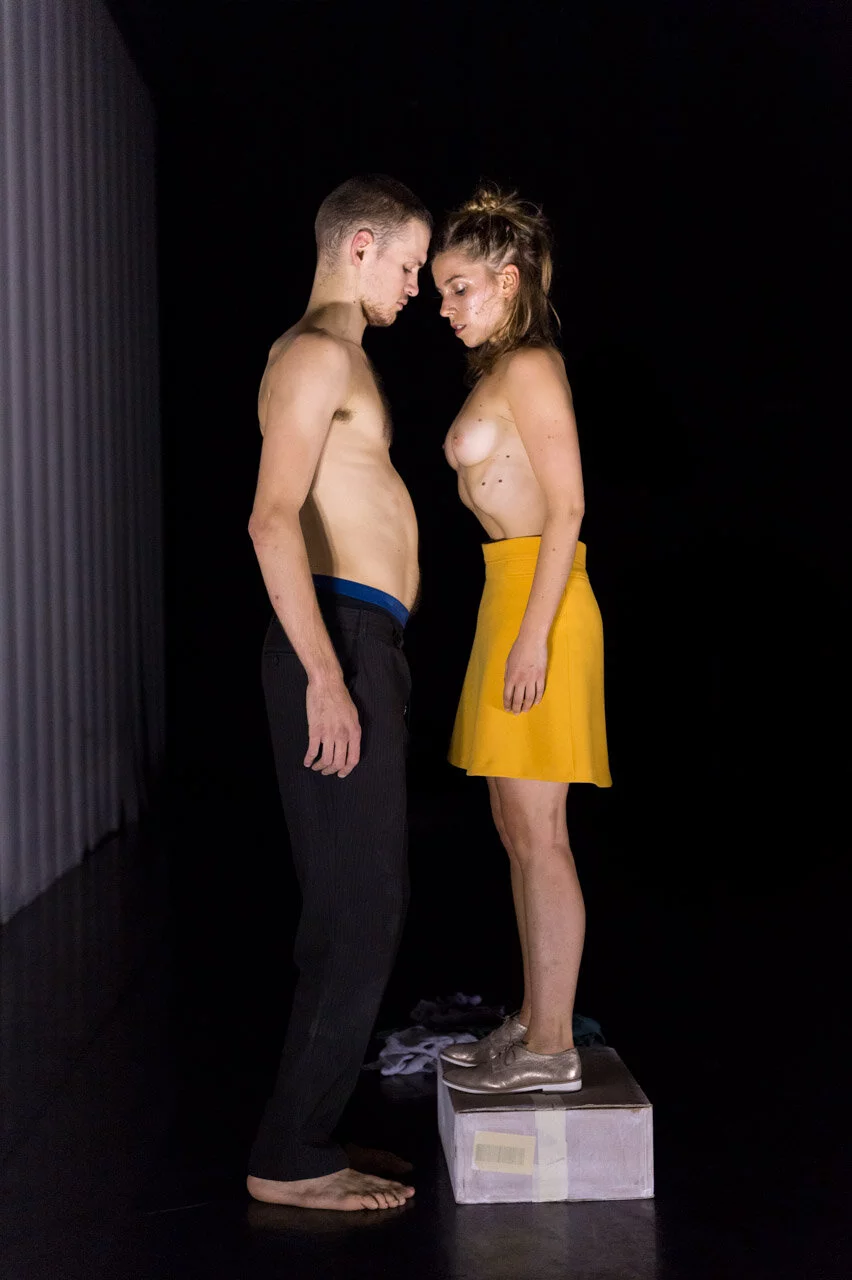
CUT is a dance piece that stems from a particular stage device as well as from the audience’s position. Philippe Saire literally cuts the audience and the stage in two and establishes a very unusual relationship between the audience and the performance.
The audience are presented with two distinct sides of the same story. They watch the performance from one side of the stands, then change sides at the interval before watching it again. A new perspective is given to the audience who by themselves then assemble the various elements like a puzzle.
The choreographer likes to experiment with different frameworks, as he has done regularly in his Dispositifs series (Black Out, NEONS, Vacuum)—short pieces inspired by visual arts. With CUT, he has created a choreographed work, in which the spatial device reaches its full potential, encompassing both the set and the audience. More than a simple dance show, CUT plays with perception and imagination, inviting the audience to an experiment with the construct of thought.
The narrative is based on the moment Philippe Saire’s family fled Algeria at the time the country was being liberated. After an unstable period and a hasty departure, his parents nurtured the memory of a heavenly paradise, where life was gentle and social links were strong, and from which they were banished. The choreographer summons up his memories and impressions of the event to create a fictional piece that clearly draws away from factual retranscription. However, notions of departure, uprooting, Eldorado and paradise lost are at the heart of the performance.
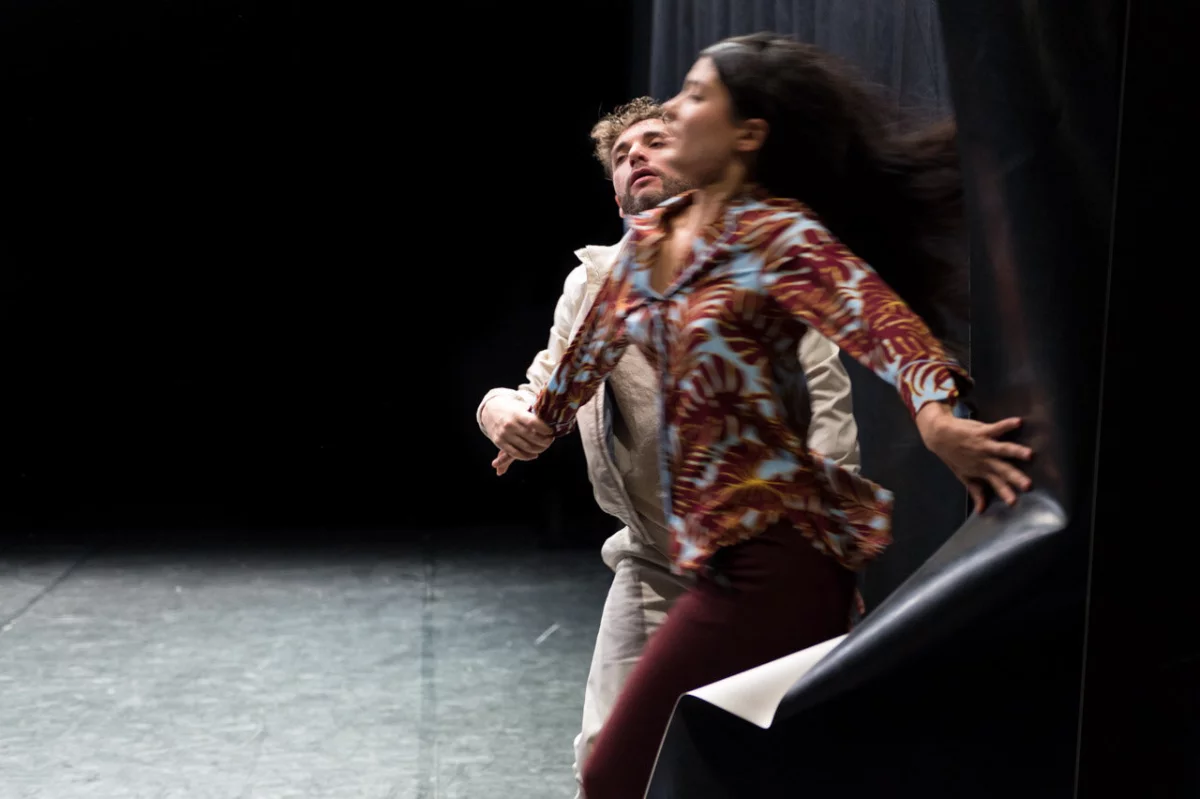
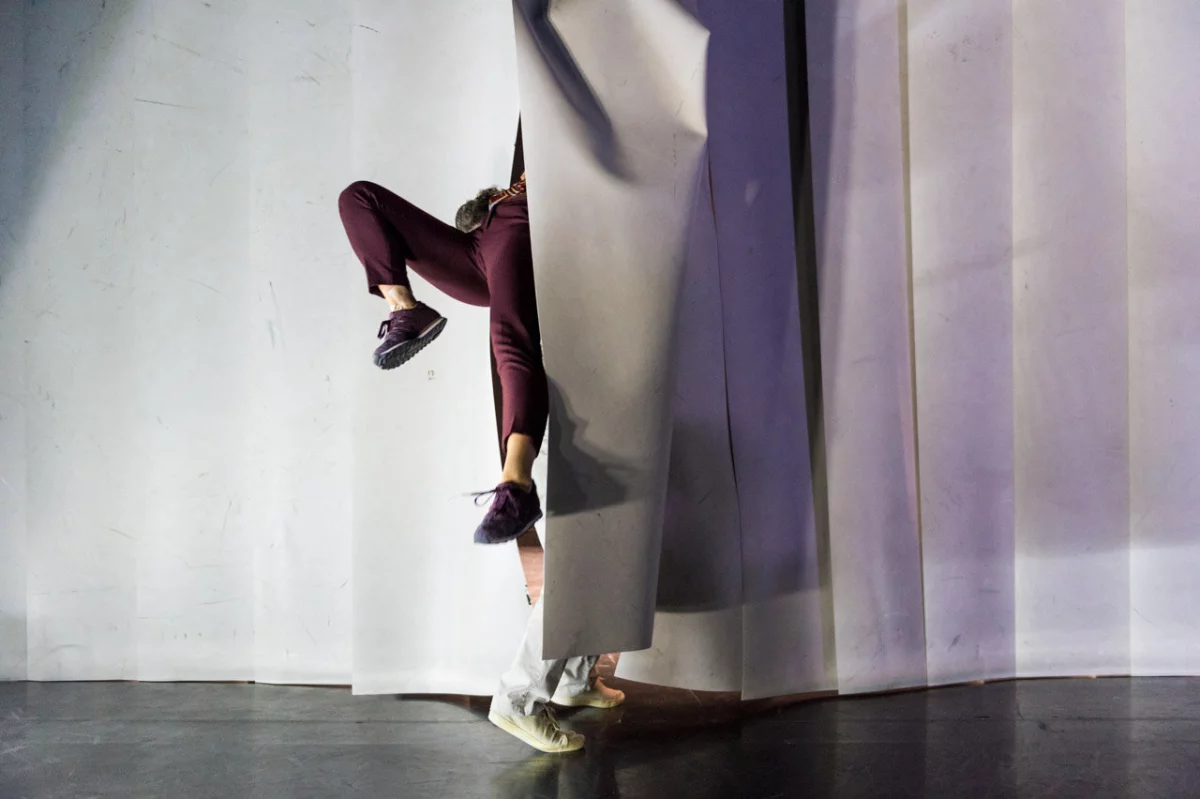
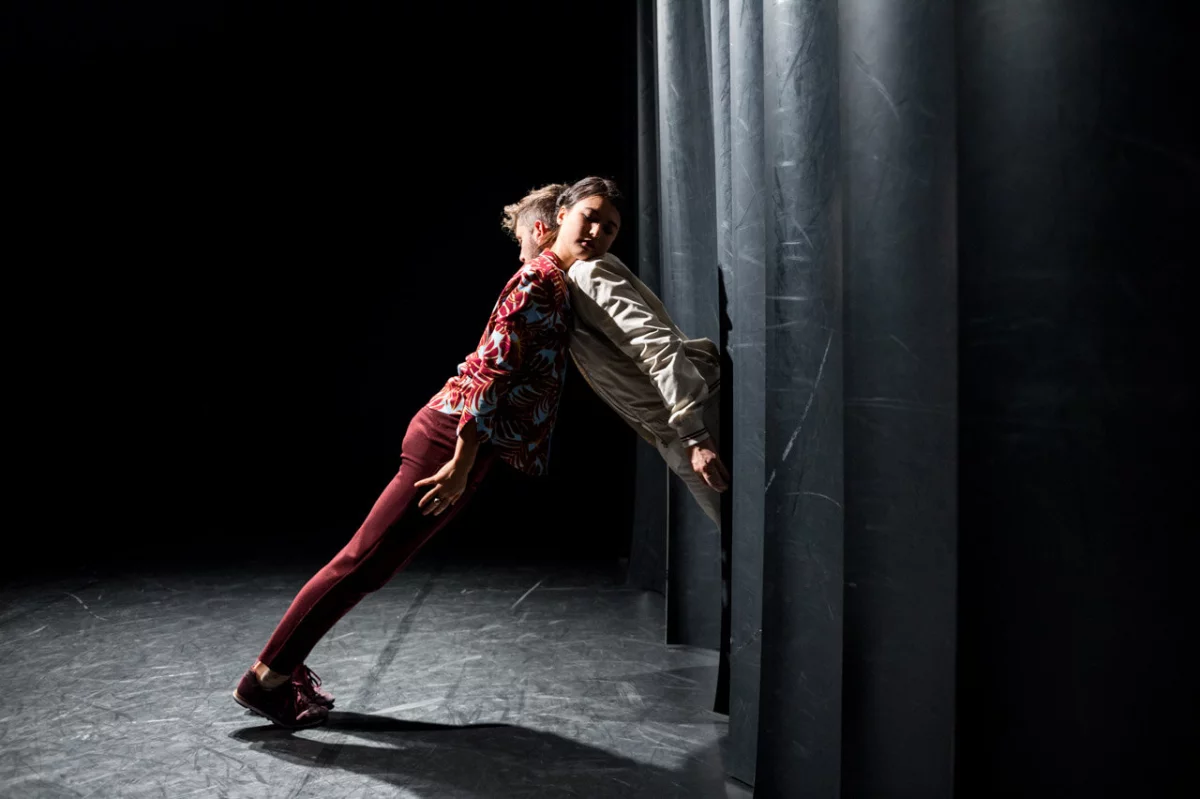
One device, one story, two distinct spaces and atmospheres. The stage and the audience are divided in two by a partition that is opaque and impenetrable for the audience and opaque yet permeable for the dancers, thanks to a system of vertical blinds. The performance occupies the whole stage and passes through the partition on stage, but the audience see only one half of it. After about 40 to 45 minutes, the audience walk out, change sides and the play is repeated.
Initially the audience weave their own story from what they see. They use their imagination to figure out what is happening on the other side, based on partial information, e.g. the sounds they are hearing. Subsequently, new information supplements, contradicts or challenges the story they had built for themselves.
The out-of-frame effect refers to cinema, and CUT to a form of footage collage. Sound information generates its own possible scenario. There is a playful element in the staging and displacement of the audience. This notion features in the way the play is dealt with, and the audience is part of that game.


Concept and choreography
Philippe Saire
Choreography in collaboration with dancers
Victor Dumont, Lazare Huet, Maïté Jeannolin,
Claire Lavernhe, Antonio Montanile
Creation assistantship
Philippe Chosson
Dramaturgy advisors
Antoine Jaccoud, Roberto Fratini Serafide
Light design
Éric Soyer
Sound design
Stéphane Vecchione
Costumes
Isa Boucharlat
Make-up
Nathalie Monod
Technical direction
Vincent Scalbert
Stage set
Léo Piccirelli
Video recording & teaser
Pierre-Yves Borgeaud
Photography & graphic design
Philippe Weissbrodt
Co-production
Hessisches Staatsballett dans le cadre de Tanzplattform Rhein-Main, un projet collaboratif de Hessisches Staatsballett au Staatstheater Darmstadt et au Hessisches Staatstheater Wiesbaden, et Künstlerhaus Mousonturm, Frankfurt ; Theater Chur.
Un projet en coopération avec le Théâtre Sévelin 36 Lausanne, Spectacles français – Théâtre Palace Bienne, Theater Chur, LAC – LuganoInScena, Théâtre du Passage Neuchâtel, Théâtre Les Halles Sierre, Théâtre Benno Besson Yverdon-les-Bains, dans le cadre du Fonds des programmateurs / Reso – Réseau Danse Suisse. Avec le soutien de Pro Helvetia.
Concept and choreography
Philippe Saire
Choreography in collaboration with dancers
Victor Dumont, Lazare Huet, Maïté Jeannolin,
Claire Lavernhe, Antonio Montanile
Creation assistantship
Philippe Chosson
Dramaturgy advisors
Antoine Jaccoud, Roberto Fratini Serafide
Light design
Éric Soyer
Sound design
Stéphane Vecchione
Costumes
Isa Boucharlat
Make-up
Nathalie Monod
Technical direction
Vincent Scalbert
Stage set
Léo Piccirelli
Video recording & teaser
Pierre-Yves Borgeaud
Photography & graphic design
Philippe Weissbrodt
Co-production
Hessisches Staatsballett dans le cadre de Tanzplattform Rhein-Main, un projet collaboratif de Hessisches Staatsballett au Staatstheater Darmstadt et au Hessisches Staatstheater Wiesbaden, et Künstlerhaus Mousonturm, Frankfurt ; Theater Chur.
Un projet en coopération avec le Théâtre Sévelin 36 Lausanne, Spectacles français – Théâtre Palace Bienne, Theater Chur, LAC – LuganoInScena, Théâtre du Passage Neuchâtel, Théâtre Les Halles Sierre, Théâtre Benno Besson Yverdon-les-Bains, dans le cadre du Fonds des programmateurs / Reso – Réseau Danse Suisse. Avec le soutien de Pro Helvetia.