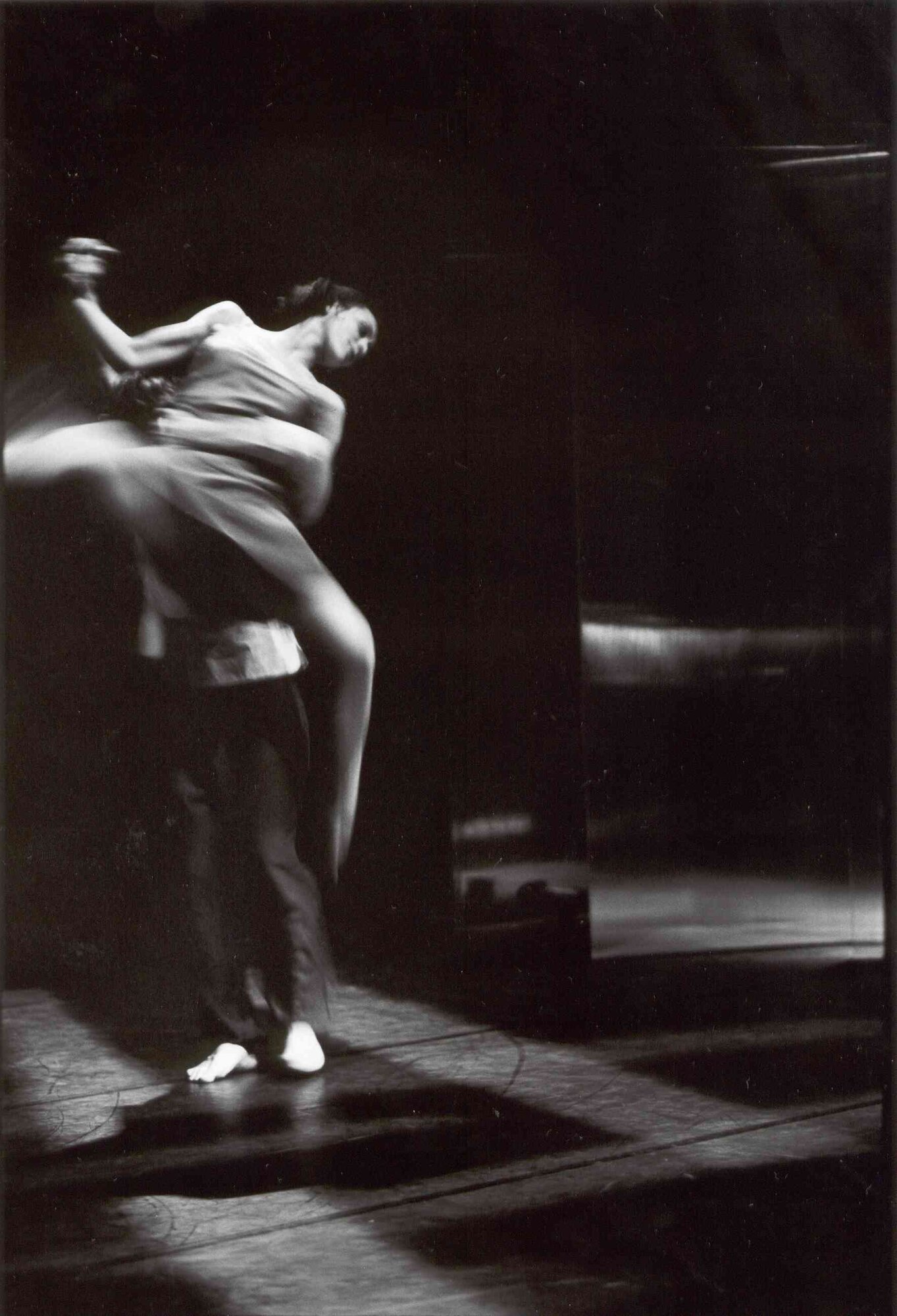
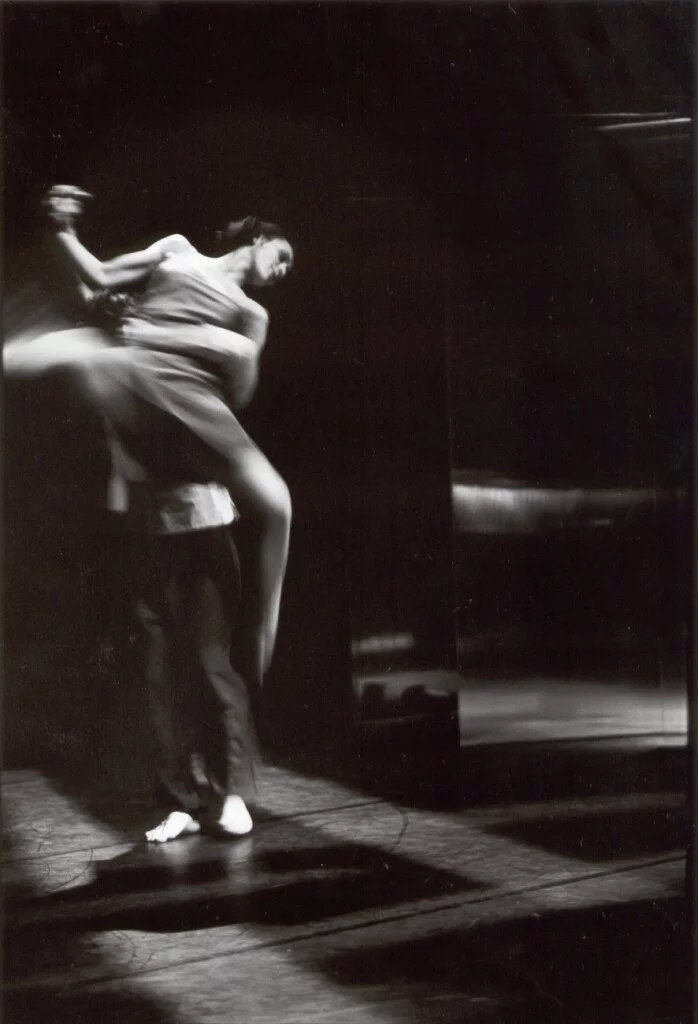
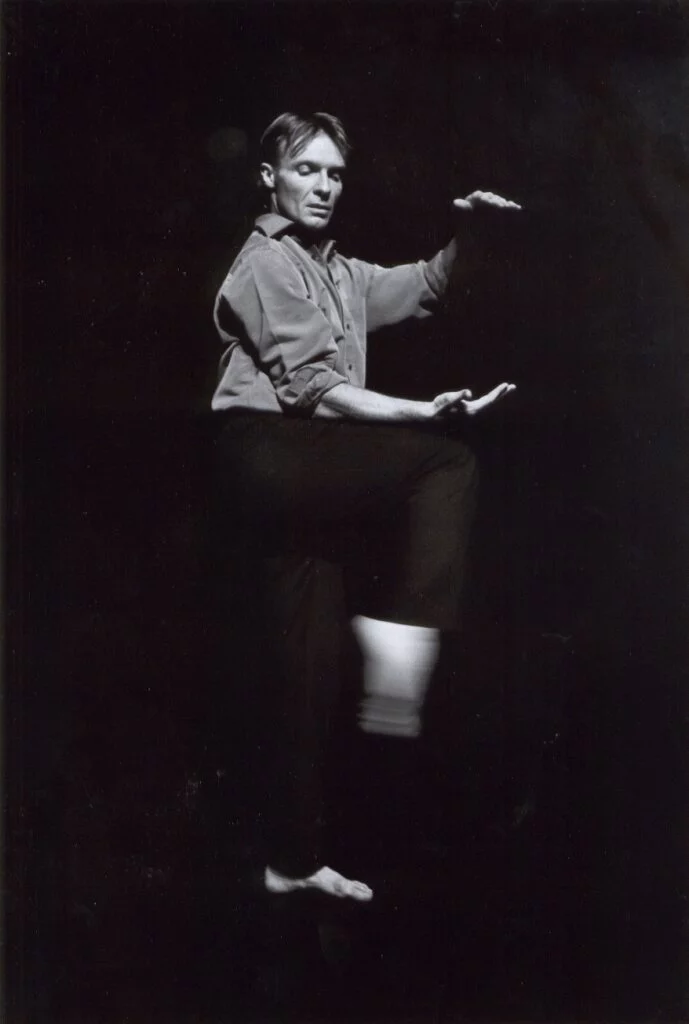
Première at Théâtre Municipal de Lausanne, January 24th, 1999. Choreography for 9 dancers.
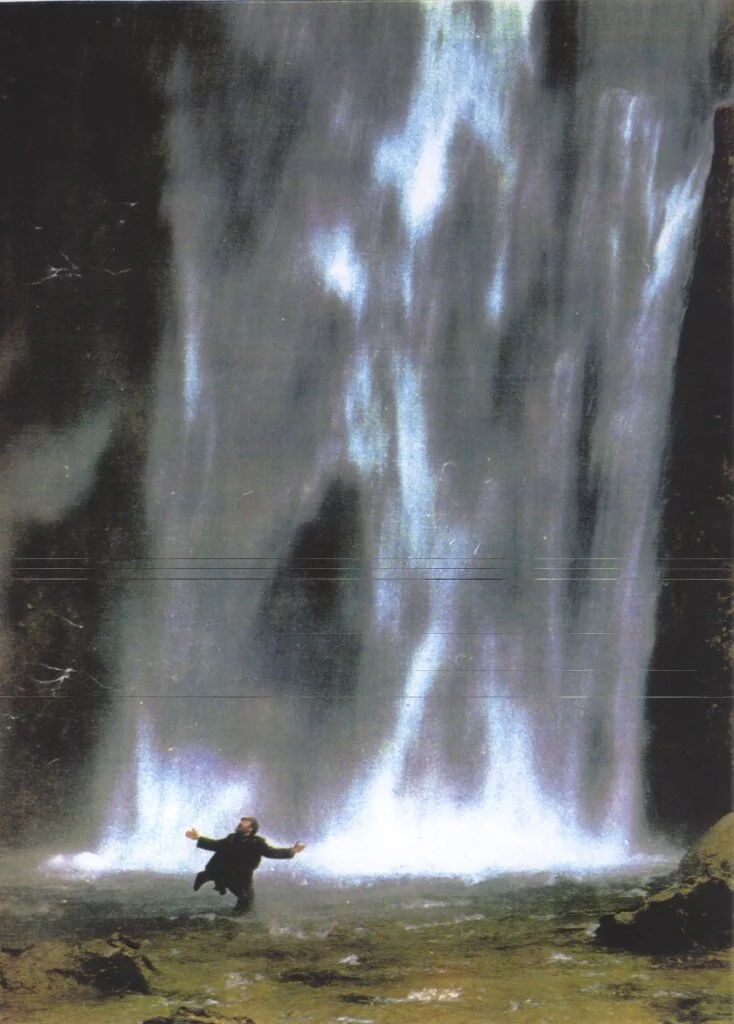
The legend. Retelling the story of Faust – which along with Don Quixote and Don Juan is one of European culture’s greatest legends – is a great challenge, not only because of the sheer number of already existing versions, but also because some aspects of the tragedy are so cunningly hidden that the creator may unwittingly pass them by. The legend of Faust has come down to us through almost six centuries, confirming that it contains all the elements which link the timeless human condition to the trials and joys of a single life-span.
Faust is essentially a being torn between extremes, a man with natural, healthy impulses and strivings, at ease with his perceived role in the material world. But he is also tormented and obsessed, propelled by dark forces towards his own ruin and ultimately that of mankind. The human spirit is depicted in a struggle with evil, with desire, with uncertainty and with crucial choices – landmarks looming on the horizon, encompassing the existence of Faust, the man and the myth. Everything has a price. For Philippe Saire, this aspect of the legend is central. Wherever we go, whatever we seem to achieve, sooner or later there is a price to pay. All around us, the headlong rush of technology-dominated millenium fever gathers momentum.
By re-focusing on a legend from another time we may, like Faust, mome ntarily slow the fleeting hours and conclude a pact with ourselves. The approach is to recount the legend of Faust and its philosophy with insolence tempered by sincere respect. Faust and his demon comprise a tragedy. Although the dance retains its freedom to extrapolate, suggest or deviate, the tragedy remains. As in Etude sur la Légèreté the approach to serious themes is unencumbered by gravity. Brazilian residence, July-August 1998. Philippe Saire, along with the company’s two dancer-assistants, set designer Carmen Perrin and lighting designer Jean-Marie Bosshard spent two months in João Pessoa, Brazil, exploring material and determining the direction for this new work. The results were the basis for the next phase of the creative process with the entire company in Switzerland from September to December 1998.



Choreography
Philippe Saire
Dancers
Massimo Biacchi,
Matthieu Bruner,
Manuel Chabanis,
Vinciane Gomrovicz,
Karine Grasset,
Estelle Héritier,
Corinne Rochet,
Philippe Saire,
N.N.
Dancers (rerun at Sévelin 36, Nov. 99)
Nabih Amaraoui,
Marion Ballester,
Karine Grasset,
Estelle Héritier,
Matthieu Burner,
Manuel Chabanis
Set design
Carmen Perrin
Lighting
Jean-Marie Bosshard
Musique
Daniel Perrin
Costumes
Anna van Brée
Music interpreted by
Grégoire Lefebvre, Pascal Desarzens, Pierre-François Massy, Jean Rochat
Choreography
Philippe Saire
Dancers
Massimo Biacchi,
Matthieu Bruner,
Manuel Chabanis,
Vinciane Gomrovicz,
Karine Grasset,
Estelle Héritier,
Corinne Rochet,
Philippe Saire,
N.N.
Dancers (rerun at Sévelin 36, Nov. 99)
Nabih Amaraoui,
Marion Ballester,
Karine Grasset,
Estelle Héritier,
Matthieu Burner,
Manuel Chabanis
Set design
Carmen Perrin
Lighting
Jean-Marie Bosshard
Musique
Daniel Perrin
Costumes
Anna van Brée
Music interpreted by
Grégoire Lefebvre, Pascal Desarzens, Pierre-François Massy, Jean Rochat


